Flooring guide
Engineered vs Solid Hardwood Flooring
Hardwood or engineered hardwood is one of the first decisions in any wood floor project, and it is often explained badly. Showrooms tend to push whichever product they have in stock, and online comparisons treat all engineered boards as if they were the same. In reality, a well-made engineered floor and a cheap one are very different products.
This guide comes from Guelph Flooring Pros, a flooring installation contractor in Guelph, Ontario, and hardwood is one of our two core specialties. Over more than 15 years and 1500 completed jobs, we have installed, sanded and repaired both types in century homes, new subdivisions, basements and condos across Guelph, Waterloo Region and Wellington County. We don't sell flooring off a showroom floor, so we have no reason to favour one over the other.
Below, we compare engineered hardwood vs solid hardwood on construction, refinishing, basements and radiant heat, Ontario's seasonal humidity, installed cost and resale value. We finish with a room-by-room recommendation you can use for your own home.
The answer depends less on which floor is better in general and more on your subfloor, your rooms and how long you plan to stay. A basement on a concrete slab, a condo with board rules and a 1920s house with a plank subfloor each point to a different choice.
- 15+ years
- 1500+ jobs
- WSIB covered
- 2-year labour warranty
1500+
floors completed
The Short Version
Choose solid hardwood for main and upper floors over a wood subfloor when you plan to stay for decades and want the option to sand it many times.
Choose engineered hardwood for basements, concrete slabs, radiant-heated floors, condos and very wide planks. It is also the safer pick anywhere humidity is hard to control.
If you choose engineered, the wear layer matters more than anything else. A 4 to 6mm wear layer on a plywood core behaves much like solid wood over its lifetime, while a 1 to 2mm layer does not.
How Each One Is Built
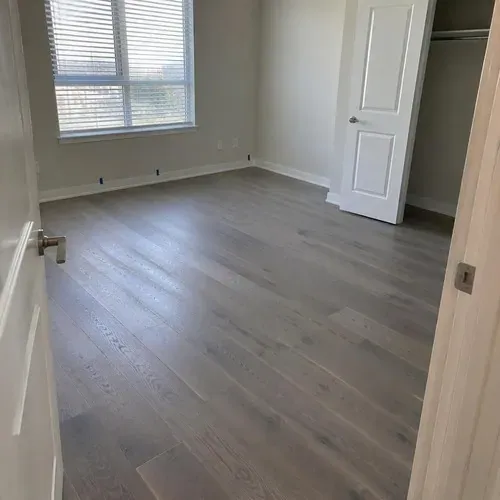
A solid hardwood board is a single piece of wood milled from the log, usually 3/4 inch thick with a tongue and groove. Everything about how it behaves comes from that: it can be sanded many times, but it expands and contracts with humidity across its width.
An engineered board has a top layer of real hardwood, called the wear layer, bonded to a core. The core is either several thin plies of wood glued with the grain running in alternating directions, or a high-density fibreboard panel.
Those cross-laid plies resist each other's movement, so the board stays far more stable when humidity changes. That one construction difference explains almost every other point in this comparison.
The face layer is also cut in different ways. Sawn-face engineered is sliced like lumber and looks exactly like solid wood, while cheaper rotary-peeled faces are unrolled from the log like a veneer and can show a wider, less natural grain pattern.
Refinishing: The Wear Layer Decides Everything
A 3/4 inch solid board has roughly 6mm of usable wood above the tongue. A full professional sanding removes well under a millimetre, so solid hardwood can typically be refinished many times over its life.
With engineered hardwood, the wear layer is the only part that can ever be sanded. Retailers often list colour, width and finish first and bury this number, but it tells you almost everything about how long the floor can last.
| Wear layer | What it means |
|---|---|
| Under 2mm | Recoat only. Plan to replace rather than sand. |
| Around 3mm | One or two careful sandings. |
| 4 to 6mm | Two to four full refinishes, close to solid wood. |
Heavily bevelled edges also matter. Sanding a bevelled floor flat can remove the bevel unevenly, so we check the profile before recommending a full sand. Our hardwood floor refinishing cost guide covers what that work costs.
Basements, Slabs and Radiant Heat
This is where engineered simply wins. Concrete holds and releases moisture, basements see the biggest humidity swings in a house, and solid boards laid over them tend to cup and gap.
Engineered hardwood can be glued directly to a tested slab with a urethane adhesive that doubles as a moisture barrier, or floated over a vapour barrier and underlay. Solid hardwood generally needs a nailing surface and is not recommended below grade.
Radiant floor heating dries wood out every winter, which is hard on solid boards. Most quality engineered products are approved over radiant heat within the manufacturer's surface temperature limit, which is why we pair it with systems installed on our heated floor installation page.
Humidity and Ontario's Seasons
Southern Ontario has one of the wider indoor humidity swings in the country. A gas-heated Guelph home can drop to 20 to 30 percent relative humidity in January, then climb above 60 percent in a humid July without air conditioning.
Solid hardwood responds to that swing. Boards shrink in winter and open hairline gaps, then swell in summer, and wider boards move more than narrow ones.
Engineered boards move far less through the same seasons, which is why wide planks of 7 inches or more are almost always engineered. With either type, keeping indoor humidity between about 35 and 55 percent with a humidifier in winter protects the floor and the finish.
Cost, Installed
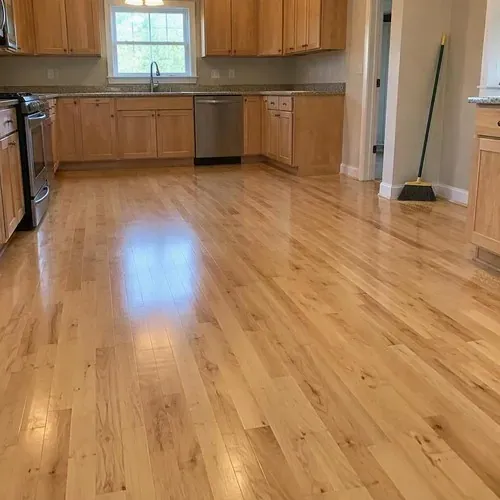
Here are typical 2026 prices in Guelph and the surrounding area, supplied and installed, before removal of old flooring, subfloor repair or stairs.
| Floor type | Typical installed cost per sq ft |
|---|---|
| Engineered, around 2mm wear layer | $9 to $12 |
| Engineered, 3 to 4mm wear layer | $11 to $15 |
| Engineered, 5 to 6mm wear layer | $14 to $18 |
| Solid red oak or maple, prefinished | $11 to $16 |
| Solid white oak or hickory, prefinished | $13 to $18 |
Solid hardwood is nailed or stapled to a plywood or OSB subfloor, which is quick and keeps labour moderate. Engineered can be nailed, glued or floated, so labour ranges from about $3.50 per square foot for floating to $7 for glue-down on a slab.
Good engineered hardwood is not a budget option. At the thicker wear layers it often costs the same as solid oak, and you are paying for stability and installation flexibility rather than saving money.
Which One for Which Room
Living and dining rooms, main floor
Either works over a wood subfloor. Solid is the long-term choice if you stay put, and engineered is better for wide planks.
Kitchens
Either, with good mats at the sink and prompt cleanup of spills. Engineered handles the humidity from cooking and dishwashers a little better.
Bedrooms and upper floors
Solid hardwood is ideal here, since these rooms see the least moisture.
Basements
Engineered only, glued or floated after a moisture test. See our guide to the best flooring for basements in Ontario for other options.
Condos
Engineered, usually over an acoustic underlay approved by the condo board. Most buildings are concrete, so solid is rarely practical.
Over radiant heat
Engineered, within the manufacturer's temperature limit.
Bathrooms and laundry rooms
Neither. Porcelain tile or waterproof vinyl plank will last far longer.
FAQ
Engineered vs Solid Questions
Can engineered hardwood be refinished?
Yes, if the wear layer is thick enough. With 3mm or more, a professional sanding can remove scratches and the old finish, and with 4 to 6mm it can be done several times. Floors under 2mm are better recoated than sanded, so check the wear layer before you buy.
Does engineered hardwood look cheaper?
A quality engineered floor looks identical to solid once installed, because the surface is real hardwood. What can look cheaper are very thin rotary-peeled faces, short board lengths and heavy bevels. A sawn-face engineered floor with long boards is indistinguishable from solid.
Which adds more resale value?
Buyers and listings generally treat both as hardwood, and either adds more appeal than carpet or laminate. A thick-wear-layer engineered floor holds its value much like solid. What hurts resale is a floor that has been sanded too thin, has gaps or is visibly damaged, regardless of type.
For installation details on each type, visit our engineered hardwood installation in Guelph and hardwood floor installation in Guelph pages.
Let Us Handle It
Prefer to leave it to a professional crew? These are the services this guide covers.
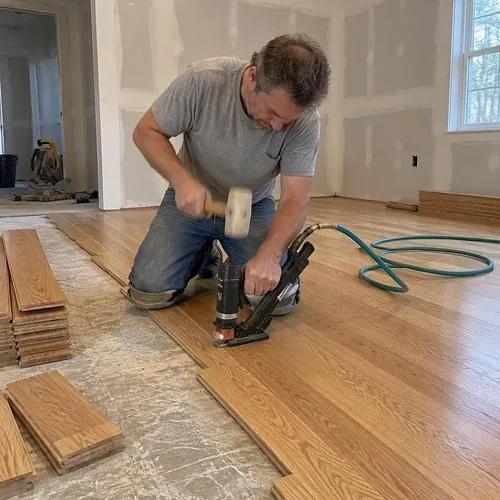
Hardwood Floor Installation
Solid oak, maple, hickory and walnut, acclimated and nailed to a tested subfloor so it stays tight through every season.
Learn moreEngineered Hardwood
Real wood on a stable core for basements, condos and radiant heat, floated, glued or nailed to suit the subfloor.
Learn more
Free written quote
Get Both Quoted Side by Side
Still deciding? We will look at your rooms, subfloor and humidity, then quote a solid and an engineered option together so you can compare them fairly. Call 226-790-3755, email info@guelphflooring.ca or request a quote.
- 1
Call or send the form
Tell us the rooms, the floor you want and your timeline.
- 2
Free on-site measure
We measure, check the subfloor and take moisture readings.
- 3
Itemised written quote
Every line listed. No deposit needed to receive it.
Open Monday to Saturday 7am to 9pm, Sunday 9am to 5pm.