Ceramic & Porcelain Tile in Guelph
Ceramic & Porcelain Tile Installation in Guelph
Tile is one of the two things we do best. Guelph Flooring Pros has set ceramic and porcelain tile flooring in bathrooms, kitchens, entryways, basements and commercial spaces across Guelph for more than 15 years. A well-installed tile floor can outlast the house, but a poorly installed one starts cracking within a year.
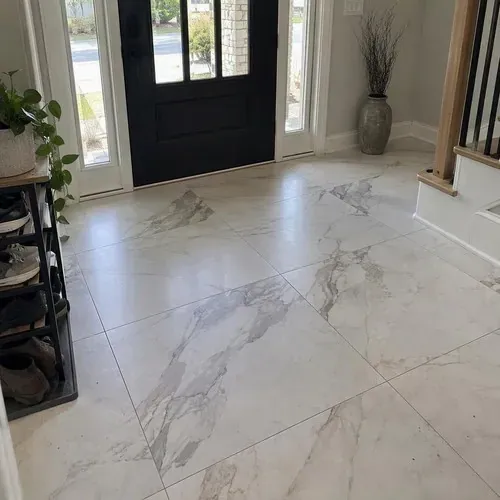
We work for homeowners renovating a single bathroom, builders fitting out new homes and businesses that need hard-wearing floors that are easy to clean. We install everything from small mosaic floor tiles to large-format 24 by 48 inch porcelain, and we are equally careful with a 40 square foot powder room as with a 2,000 square foot commercial floor.
This page explains why tile fails, how to choose between ceramic and porcelain, what substrate prep and uncoupling membranes actually do, how tile pairs with radiant heat, and what ceramic tile installation in Guelph costs. It is written for homeowners, but general contractors will recognise the standards we work to.
- 15+ years
- 1500+ jobs
- WSIB covered
- 2-year labour warranty
1500+
floors completed
Cracked Grout and Lifting Tiles Are Substrate Problems, Not Tile Problems
When customers show us a failed tile floor, they usually blame the tile. It is almost never the tile.
Cracked grout lines, hollow-sounding tiles and cracks running across several tiles in a straight line are signs that something underneath moved. Either the subfloor flexed between joists, the concrete slab cracked and carried the crack up, or the tile was set without enough mortar contact.
Tile is rigid and can't bend. Everything we do before setting the first piece is about giving it a flat, stiff and stable base.
Ceramic or Porcelain: What Goes Where
Both are fired clay, but porcelain is made from finer clay fired at higher temperatures. That makes it denser and less absorbent, with water absorption of 0.5 percent or less.
Porcelain is the better choice for entryways where road salt and slush are tracked in, basements, bathrooms, heated floors and commercial spaces. Through-body porcelain carries its colour all the way through, so chips are less visible.
Ceramic is softer, easier to cut and usually cheaper. It works well on walls and in low-traffic, dry rooms, but we rarely recommend it for Ontario entryways.
Substrate Preparation and Uncoupling Membranes
Tile needs two things from its substrate: flatness and stiffness. Industry standards set flatness for tiles with any edge 15 inches or longer at no more than 1/8 inch variation in 10 feet. Smaller tiles allow 1/4 inch.
Stiffness is measured as deflection. A wood-framed floor for ceramic or porcelain tile should deflect no more than L/360 under load, meaning the joist bends less than 1/360 of its span. Natural stone needs twice that stiffness, at L/720.
Even a stiff floor moves a little with seasons and temperature. An uncoupling membrane, such as Schluter DITRA, sits between the substrate and the tile and absorbs that movement so it doesn't reach the grout. It also acts as a waterproofing layer and helps spread loads over a wooden subfloor.
Tile Floors Over Radiant Heat
Tile and stone are the best floors to pair with in-floor heat. They conduct warmth efficiently and are not damaged by it, unlike solid hardwood.
We install electric heating mats or cable directly under the tile, often within an uncoupling membrane designed to hold the cables. The system is tested before, during and after tiling so a damaged cable is never buried.
If you are tiling a bathroom, kitchen or basement, this is the moment to add heat. Our radiant heated flooring page covers systems and costs.
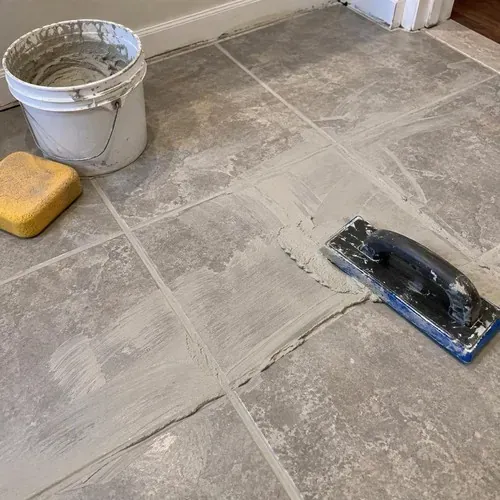
Layout, Lippage and Grout Lines
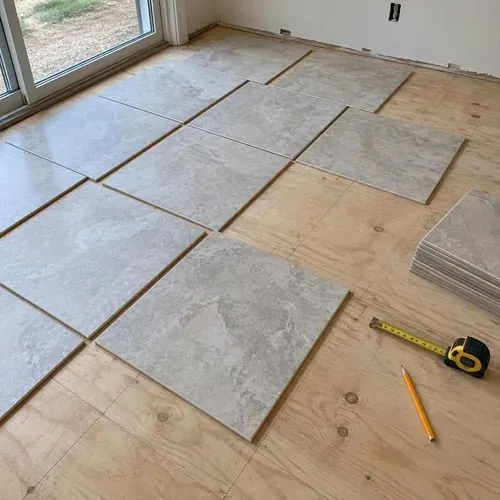
A tile floor looks right when the pattern is centred on what the eye sees first: the doorway, the vanity, the fireplace. We dry-lay and snap lines before mixing any mortar, so you don't end up with a thin sliver of tile along the most visible wall.
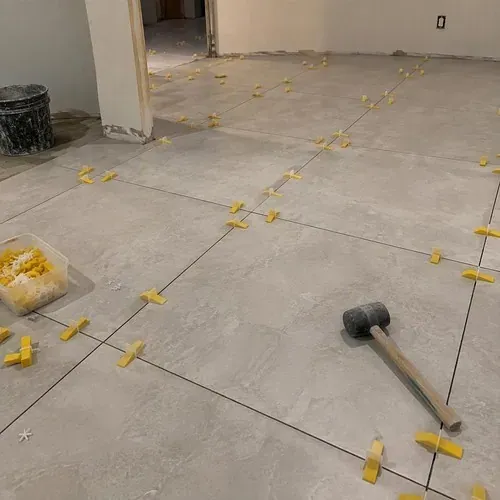
Lippage is the height difference between neighbouring tiles, and it is the most visible sign of a rushed job. Large-format tiles are especially prone to it because they are rarely perfectly flat.
We use a levelling clip system, back-butter large tiles and offset rectangular tiles no more than a third of their length to minimise it. Grout lines are kept consistent with spacers and checked as we go.
Our process
Our Tile Installation Process
- 1
Checking Subfloor Deflection
Before quoting, we look at joist size, spacing and span, and walk the floor for bounce. If the floor isn't stiff enough for tile, we add a second layer of plywood or blocking between joists.
Most tile failures could have been prevented at this step. It takes 15 minutes, and very few installers do it.
- 2
Membrane and Waterproofing
Over plywood, we install an uncoupling membrane bonded with modified thinset. In showers, wet rooms and entryways, seams are sealed with waterproofing tape so the whole floor becomes a watertight layer.
On concrete, we fill or treat cracks and install a crack-isolation membrane over any that are active.
- 3
Setting, Spacing and Cure Time
Tiles are set in thinset mortar with the right trowel notch for their size, and larger tiles are back-buttered for full contact. Industry standards call for at least 80 percent mortar coverage in dry areas and 95 percent in wet areas, and we pull tiles to check.
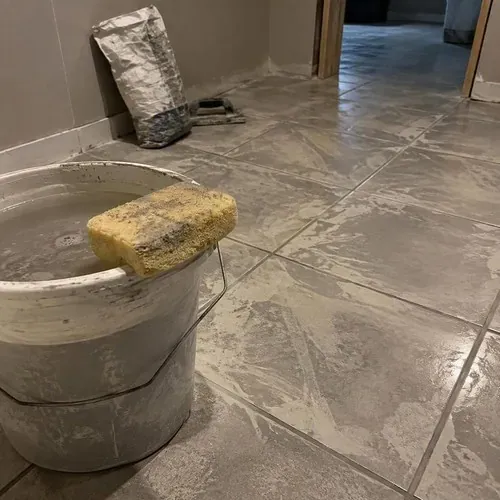
The mortar then needs time to cure before grouting, usually 24 hours. That's why tile floors can't be walked on the day they are set.
- 4
Grouting and Sealing
We choose grout by joint width and use. Unsanded grout suits joints under 1/8 inch, sanded grout suits wider joints, and epoxy or urethane grouts resist stains in kitchens and commercial spaces.
Cement grouts are sealed once cured to help resist staining. Movement joints are left at walls and every 20 to 25 feet in large rooms, then filled with colour-matched silicone rather than grout.
What Tile Installation Costs in Guelph
Typical 2026 prices in Guelph, labour only:
| Tile type | Labour per sq ft |
|---|---|
| Standard porcelain or ceramic (12x24 or smaller) | $9 to $16 |
| Large-format porcelain (24x48 and up) | $14 to $22 |
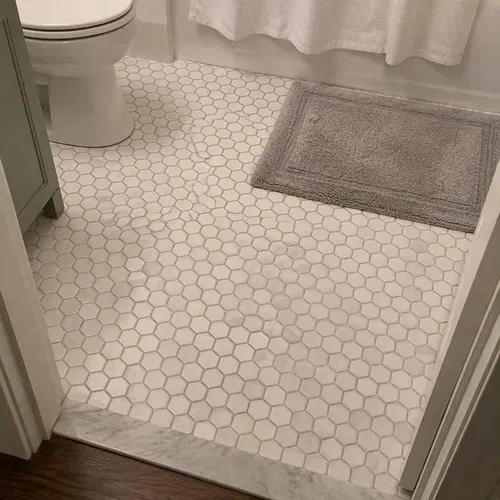
| Mosaic or small hex | $15 to $25 |
| Herringbone or pattern layouts | $16 to $26 |
Tile material usually adds $3 to $15 or more per square foot. Uncoupling membrane adds $2 to $4, and subfloor stiffening, levelling and old tile removal are quoted separately. Installed, most tile floors land between $14 and $30 per square foot.
FAQ
Tile Installation Questions
Can you tile over an existing floor?
Sometimes. Tile can go over sound, well-bonded existing tile after surface prep, but it raises the floor about 1/2 inch, which affects doors, toilets and transitions. Tile never goes over vinyl, laminate or wood flooring.
What flooring is best for moisture-prone areas?
Porcelain tile over a waterproofing membrane is the most water-resistant floor you can install. Rigid-core vinyl plank is a good second choice where budget or comfort matters more.
How long before I can walk on a new tile floor?
Light foot traffic is usually fine 24 hours after grouting. Heavy furniture, appliances and full traffic should wait 72 hours, and any grout sealer goes on after the grout has cured.
Do you seal the grout, and does it need redoing?
We seal cement grout after it cures. Penetrating sealers typically need reapplying every one to three years depending on traffic and cleaning. Epoxy grout doesn't need sealing, which is why we recommend it for kitchens and busy entryways.
Planning a pattern such as herringbone or a tile border? See our herringbone, parquet and custom floors page.
More on Ceramic & Porcelain Tile
Free written quote
Get a Tile Installation Quote
We check your subfloor's stiffness and flatness at the quote, so the price covers the prep your tile needs. Call 226-790-3755 or request a quote.
- 1
Call or send the form
Tell us the rooms, the floor you want and your timeline.
- 2
Free on-site measure
We measure, check the subfloor and take moisture readings.
- 3
Itemised written quote
Every line listed. No deposit needed to receive it.
Open Monday to Saturday 7am to 9pm, Sunday 9am to 5pm.