Flooring guide
How to Fix Squeaky Floors
A squeaky floor is one of the most common complaints in older homes and one of the most searched-for DIY repairs. The good news is that most squeaks are harmless and fixable. The less good news is that a lot of advice online treats the noise instead of the cause.
This guide comes from Guelph Flooring Pros, a flooring installation and repair contractor in Guelph, Ontario. We have fixed squeaks in century homes, 1990s subdivisions and brand-new builds for more than 15 years, and floor and subfloor repair is a regular part of our work.
Below we explain what actually makes a floor squeak, how to find the source, how to fix it from below and from above, which popular fixes don't work and the signs that a squeak points to a bigger subfloor or joist problem. If you're comfortable with a drill and have access to the basement ceiling, many squeaks are a weekend fix you can do yourself.
- 15+ years
- 1500+ jobs
- WSIB covered
- 2-year labour warranty
1500+
floors completed
A Squeak Is Two Things Rubbing Together
Every squeak has the same cause: two surfaces moving against each other under weight. Once you know which two surfaces, the fix is usually obvious.
The most common pairs are:
- Subfloor rubbing on a joist, where the subfloor has lifted slightly and moves up and down on a nail.
- A nail sliding in its hole, where the wood has shrunk and the nail no longer grips.
- Floorboards rubbing on each other, common in hardwood when boards shrink in dry winter air.
- Subfloor panels rubbing at their edges, where tongue-and-groove joints have loosened.
The job is to stop the movement, not quiet the noise.
Find the Squeak Before You Fix Anything
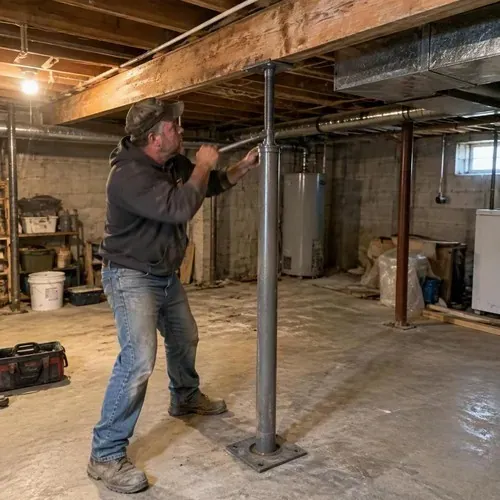
Have someone walk slowly across the floor while you listen. It's easiest with one person upstairs and one in the basement.
Once you've found the spot, locate the nearest joist. Joists in most Ontario homes run every 16 inches and can be found with a stud finder, by looking for rows of nail heads or from the basement ceiling.
Watch from below as someone steps on the spot. If you can see the subfloor move or a gap open between the subfloor and joist, you have found the problem. If there is no movement below, the squeak is probably between the finished boards themselves.
Fixing It From Below
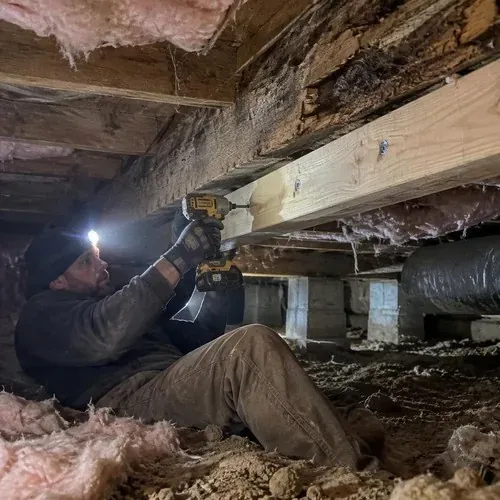
If your basement ceiling is unfinished, fixing from below is the cleanest method. Nothing shows on the finished floor.
Shims. Where there is a gap between the joist and the subfloor, apply a little wood glue to a thin wooden shim and tap it gently into the gap. Don't force it, or you will lift the floor and create a new bump.
Blocking and adhesive. For longer gaps, run a bead of construction adhesive along the joint between joist and subfloor, or screw a length of 2x4 against the joist, tight to the underside of the subfloor. Short screws can then pull the subfloor down to the block, as long as they don't reach the finished floor above.
Fixing It From Above
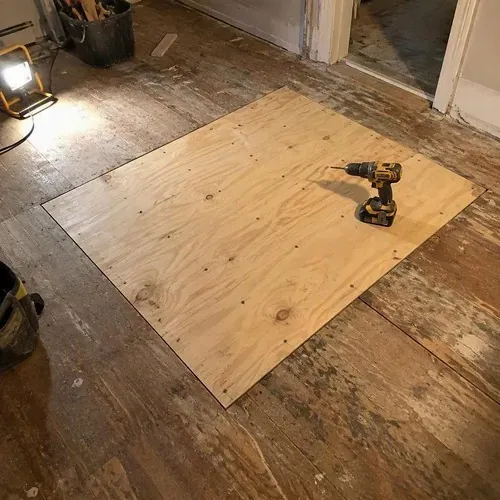
If you can't reach the floor from below, you have to work from above. It works, but it's visible.
For carpeted floors, specialised squeak-repair screw kits drive a screw through the carpet and subfloor into the joist, then snap off the head below the carpet surface. They're effective and nearly invisible.
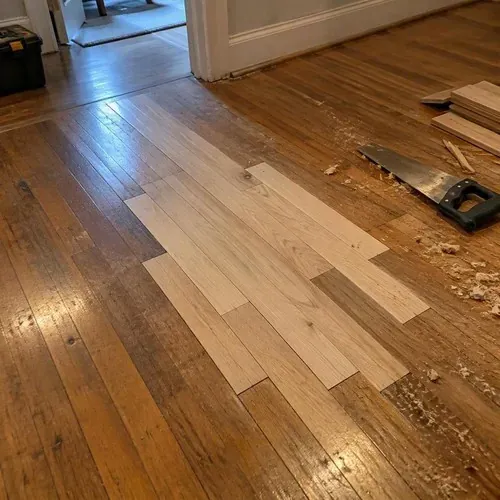
For hardwood, the options are face-nailing with thin trim nails through the board into the joist, then filling the holes with matching wood filler, or using a hardwood repair screw kit. Both leave small visible marks, which is why people often regret them in a main room. We usually recommend fixing hardwood from below where possible.
What Doesn't Work
Talcum powder or baby powder
Sprinkling it into the gaps between boards can quiet board-to-board squeaks for a while, but it doesn't stop the movement and the noise returns.
Lubricants like WD-40
They don't reach the actual rubbing surfaces and can stain wood and attract dirt.
More nails
Nails are often the original problem. They loosen as wood moves, and new nails loosen the same way. Screws hold much better.
Ignoring it
A small squeak is fine to live with, but a spreading one usually means the movement is getting worse.
When a Squeak Means Something Worse
Most squeaks are cosmetic. A few are symptoms of a bigger problem that needs attention.
Call a professional if you notice movement or squeaks across a wide area rather than one spot, or if parts of the floor feel soft, spongy or bouncy. The same goes for squeaks that appear suddenly after a leak or near a bathroom, kitchen or exterior door.
Other warning signs include cracked tile or grout nearby, gaps opening between floor and baseboard and doors that begin to stick. Those can point to water-damaged subfloor, a cracked or notched joist or framing that is settling. Our floor and subfloor repair service diagnoses and fixes these properly.
FAQ
Squeaky Floor Questions
Can you fix a squeaky floor without removing the flooring?
Yes, in most cases. From below, shims, blocking and adhesive fix the cause without touching the finished floor. From above, repair screw kits pull the subfloor down through carpet or hardwood with only small marks.
Do squeaky floors mean structural damage?
Usually not. Most squeaks are caused by loose fasteners and normal wood movement. Squeaks across a large area, soft spots or squeaks that started after water damage are worth having inspected.
Why do floors squeak more in winter?
In winter, heated indoor air is very dry, often below 30 percent humidity in Ontario homes. Wood shrinks as it dries, which loosens nails and opens gaps between boards and subfloor. A humidifier that keeps indoor humidity around 35 to 45 percent often reduces winter squeaks noticeably.
Let Us Handle It
Prefer to leave it to a professional crew? These are the services this guide covers.
Free written quote
Book a Floor Diagnosis in Guelph
If the squeak is spreading, soft or new, we will find the cause and give you a written repair quote. Call 226-790-3755 or book a visit.
- 1
Call or send the form
Tell us the rooms, the floor you want and your timeline.
- 2
Free on-site measure
We measure, check the subfloor and take moisture readings.
- 3
Itemised written quote
Every line listed. No deposit needed to receive it.
Open Monday to Saturday 7am to 9pm, Sunday 9am to 5pm.